


How to Reset Exhausted Fibroblasts
|
|
Time to read 11 min






|
|
Time to read 11 min
Exhausted fibroblasts are aging skin cells that have become less efficient at producing and maintaining the collagen, elastin, and hyaluronic acid that keep skin firm, strong, hydrated, and youthful-looking. These tired, old, or aging fibroblasts also become less efficient at cellular repair and maintenance. The mitochondria in aging fibroblasts may become dysfunctional and generate excess reactive oxygen species (ROS) that cause further cellular damage.
As fibroblasts become tired, they may also be less able to respond to signals that normally stimulate fibroblast activity. Ingredients such as retinoids, vitamin C, growth factors, and exosomes can encourage extracellular matrix production, but continually asking an aging,exhausted, dysfunctional fibroblast to work harder may not address the underlying cellular problems.
This is where the emerging concept of resetting fibroblasts becomes interesting. Can you reset fibroblasts, how do you reset fibroblasts, and what does resetting fibroblasts mean? Rather than simply stimulating tired fibroblasts, researchers are investigating ways to improve their underlying cellular health by preventing cellular senescence, eliminating cells that are already senescent, improving autophagy, mitochondrial and lysosomal function, supporting DNA repair, and influencing epigenetic signals such as DNA methylation. These emerging approaches to resetting exhausted fibroblasts represent a new way of thinking about anti-aging skincare.
Exhausted fibroblasts contribute to visible skin aging
Cellular senescence can damage surrounding healthy skin
Healthy cellular repair pathways help fibroblasts function better
New skin care strategies aim to reset fibroblast function
As fibroblasts age, they accumulate cellular damage and become less efficient at maintaining the collagen, elastin, and extracellular matrix that keep skin firm and strong. Some eventually become senescent, meaning they permanently stop dividing and no longer function normally. But senescent fibroblasts are not simply inactive. They can develop a senescence-associated secretory phenotype (SASP) and release inflammatory cytokines and matrix metalloproteinases (MMPs) that degrade collagen, promote inflammation, damage surrounding tissue, and negatively affect neighboring cells.
The concept of resetting fibroblasts is to interrupt this cycle. This may include helping tired or exhausted fibroblasts function more efficiently, preventing healthy fibroblasts from becoming senescent, and eliminating or reducing the harmful effects of cells that are already senescent. The goal is essentially to turn back the cellular clock, shifting the skin toward a healthier environment in which fibroblasts behave more like younger, better-functioning cells. This emerging approach to skin longevity focuses on improving the health of the fibroblast itself rather than simply asking an aging cell to produce more collagen.
There is no single way to “reset” an exhausted fibroblast. Researchers are investigating several approaches to preserve healthy fibroblast function, delay cellular senescence, improve cellular repair, and reduce the burden or harmful effects of fibroblasts that have already become senescent. I will take you through the most exciting areas of research interest that aim to rejuvenate fibroblasts.
mTORC1 is a major cellular pathway that helps determine whether a cell focuses on growth and protein production or cellular maintenance and recycling. Persistent or dysregulated mTORC1 signaling may contribute to fibroblast aging and cellular senescence. Temporarily reducing excessive mTORC1 activity may give stressed fibroblasts a “rest,” promote cellular maintenance, and help preserve healthier fibroblast function. This is the longevity pathway targeted by rapamycin and newer mTORC1-targeting compounds such as RLX-201.
Autophagy is the cell's cleanup and recycling system. It helps remove damaged proteins and organelles before they accumulate and interfere with cellular function. Supporting appropriate autophagy may improve cellular housekeeping, reduce accumulated damage, and help aging fibroblasts maintain healthier function.
Aging fibroblasts can develop dysfunctional mitochondria, resulting in less efficient energy production and increased reactive oxygen species (ROS). These free radicals can further damage DNA, proteins, and cellular structures. Improving mitochondrial health and reducing oxidative stress may help break this cycle and preserve fibroblast function.
Lysosomes work with autophagy to digest and recycle damaged cellular material. When lysosomal function becomes impaired, cellular waste can accumulate. Supporting healthy lysosomal function may improve the fibroblast's ability to clear damaged material and maintain cellular homeostasis.
Proteostasis is the cell's ability to make, fold, maintain, and remove proteins correctly. Aging disrupts this quality-control system, allowing damaged and misfolded proteins to accumulate. Improving proteostasis may reduce cellular stress and help fibroblasts function more efficiently.
Fibroblasts continuously experience DNA damage from UV radiation, oxidative stress, environmental exposures, and normal cellular metabolism. Supporting effective DNA repair and reducing new DNA damage may help prevent the persistent cellular stress signals that can push fibroblasts toward senescence.
Once a fibroblast has become truly senescent, simply “resting” it may not restore normal function. Another longevity strategy is therefore to remove senescent cells altogether. Compounds that selectively eliminate senescent cells are called senolytics. Removing these dysfunctional cells could theoretically reduce the senescent-cell burden and create a healthier environment for the remaining fibroblasts.
Another approach is to leave senescent cells in place but reduce the damaging signals they produce. Senomorphics are compounds that suppress aspects of the senescent phenotype, including harmful inflammatory signaling, without necessarily killing the cell.
Fibroblasts also accumulate epigenetic changes as they age, including alterations in DNA methylation that change which genes are turned on and off. An emerging area of longevity research is attempting to modify these epigenetic patterns to shift aging cells toward a more youthful pattern of gene expression and function.
Skincare cannot turn an old fibroblast into a young one, but certain ingredients may target some of the cellular processes that contribute to fibroblast exhaustion.
One important strategy is preventing fibroblasts from becoming senescent in the first place. Daily sunscreen, antioxidants, anti-inflammatory ingredients, and protection from pollution help reduce UV damage, oxidative stress, and inflammation that contribute to cellular senescence.
Other skincare ingredients target specific aspects of fibroblast aging, such as autophagy, mitochondrial function, cellular repair, epigenetic changes, and mTORC1 signaling, with the goal of improving or rejuvenating fibroblast function. We will discuss these different antiaging skincare strategies below.
mTORC1 is a cellular signaling pathway that helps control the balance between growth and cellular maintenance. Research suggests that mTORC1 activity can become abnormally elevated in aging fibroblasts, contributing to cellular senescence and reduced fibroblast function. Temporarily reducing mTORC1 activity may give an exhausted fibroblast a “rest” from growth signaling and allow greater emphasis on cellular maintenance and repair.
RLX-201 (Dioxothiazetidinyl Demethoxyrapamycin), the active longevity ingredient in Re-Q, was developed to selectively inhibit mTORC1 while preserving mTORC2 signaling. In laboratory studies of human dermal fibroblasts, RLX-201 reduced mTORC1 signaling and shifted older fibroblasts toward a morphology resembling younger fibroblasts.
This lightweight nongreasy serum gives mature aging skin a chance to recharge. This longevity serum helps restore more youthful cellular behavior, which may allow skin to respond more effectively to the anti-aging ingredients in your routine. Use once or twice daily to support healthier, younger-acting skin.
Several skincare ingredients are being studied for their ability to stimulate autophagy, including Crepidiastrum denticulatum extract (Pollux CD™), Aquatide™, melatonin, resveratrol, Saururus chinensis, and some exosome formulations. They work through different cellular pathways involved in cleanup, recycling, and stress responses.
Aquatide™ (heptasodium hexacarboxymethyl dipeptide-12) was specifically developed as an autophagy-activating peptide. A small randomized, placebo-controlled study found that topical Aquatide reduced oxidized proteins in the stratum corneum and improved skin elasticity.
Resveratrol and melatonin can influence SIRT1, a longevity-associated pathway involved in autophagy, mitochondrial function, and cellular stress responses. This makes them interesting for more than their antioxidant effects.
Urolithin A is a particularly interesting newer ingredient because it promotes mitophagy, the selective removal of damaged mitochondria. In UVA-exposed human dermal fibroblasts, urolithin A improved mitochondrial function and reduced oxidative stress, DNA damage, and markers of cellular senescence.
Trehalose may also promote autophagy. A topical liposomal trehalose formulation has demonstrated activation of cutaneous autophagy, although the clinical study involved acne rather than fibroblast aging.
Here are some skincare products that target autophagy:
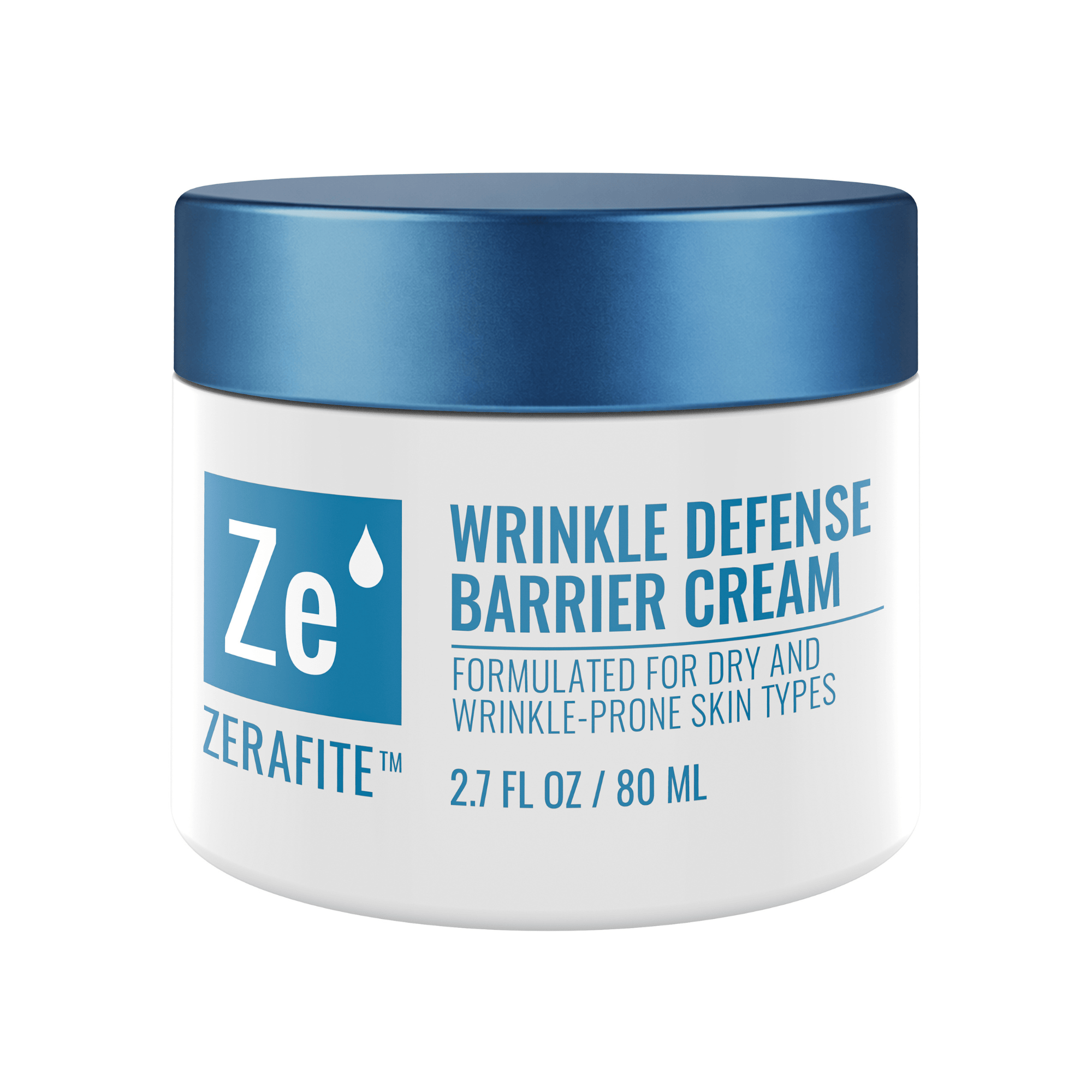
Zerafite Wrinkle Defense Barrier Cream targets several aspects of cellular aging at once. It contains Aquatide™ (heptasodium hexacarboxymethyl dipeptide-12) and Crepidiastrum denticulatum (Pollux CD™), ingredients associated with increased autophagy, as well as Saururus chinensis and Ulmus davidiana.
By supporting cellular cleanup while also providing antioxidant, anti-inflammatory, pollution-protective, and barrier-repair benefits, this moisturizer is designed to help protect fibroblasts from processes that contribute to cellular senescence and skin aging.
Plated SkinScience INTENSE Serum contains platelet-derived exosomes called Renewosomes™, which carry growth factors, antioxidants, and cellular signals involved in skin repair and regeneration. Most interesting for fibroblast aging, clinical studies have shown a decrease in senescent cells after treatment with Plated serum. This may help create a healthier cellular environment for tired or exhausted fibroblasts.
SkinCeuticals Resveratrol B E contains 1% resveratrol, an antioxidant that activates SIRT1, a longevity-associated pathway involved in autophagy, mitochondrial function, metabolism, and cellular stress responses. By promoting cellular maintenance pathways while reducing oxidative stress, resveratrol may help protect fibroblasts from some of the damage that contributes to cellular senescence.
This ISDIN Melatonik Restorative Melatonin NIght Serum contains topical melatonin, an antioxidant with interesting effects on cellular repair and autophagy. Laboratory research in human fibroblasts has shown that melatonin can increase autophagy through the PI3K/Akt/mTOR pathway, helping cells remove and recycle damaged cellular components. Melatonik also contains vitamin C and bakuchiol to provide additional antioxidant and anti-aging benefits. Although autophagy has not been demonstrated clinically as the mechanism of Melatonik's anti-aging effects, its melatonin content makes it an interesting product for supporting cellular maintenance pathways associated with healthier fibroblast function.
DNA repair enzymes help cells correct DNA damage before it becomes a permanent mutation. Some enzymes recognize damaged or abnormal bases, remove the damaged section, and allow the cell’s repair machinery to replace it with the correct DNA sequence. Other enzymes, such as photolyase, directly reverse UV-induced lesions that distort the DNA double helix, essentially helping restore the DNA to its normal structure.
Photozyme Vitamin C+E Ferulic Acid Serum with DNA combines three DNA repair enzymes, photolyase, endonuclease, and glycosylase, with 15% L-ascorbic acid, 1% vitamin E, and 0.5% ferulic acid. The repair enzymes target different forms of UV-related DNA damage, while the antioxidant combination helps reduce additional free-radical damage. Vitamin C also supports collagen synthesis, making this an interesting approach to both protecting aging fibroblasts from further damage and stimulating collagen production.
Resetting exhausted fibroblasts is a new approach to skin longevity that focuses on improving the health of aging skin cells rather than simply stimulating them to make more collagen. Emerging strategies target cellular senescence, mTORC1, autophagy, mitochondrial and lysosomal function, DNA repair, and epigenetic aging. The goal is to reduce accumulated cellular damage, remove or limit the effects of senescent cells, and help healthier fibroblasts function more efficiently. These approaches may eventually help improve collagen production and protect against wrinkles, sagging, and thinning skin, but much of this science is still emerging and more clinical research is needed.
To findout the best skin care prodcuts for your skin's needs, we recommend that you take the 16 Skin Type Quiz.
[[ctaquiz]]
Dr. Leslie Baumann MD, FAAD
An exhausted or tired fibroblast is a consumer-friendly term for an aging or stressed fibroblast that no longer functions as efficiently. It may produce less collagen and extracellular matrix, have impaired cellular repair and mitochondrial function, and eventually become senescent.
Emerging research suggests that we may be able to improve the function of exhausted fibroblasts and reduce cellular senescence. RLX-201 has been shown in laboratory studies to inhibit excessive mTORC1 activity and shift older fibroblasts toward a younger-looking, more functional phenotype. Topical platelet-derived exosomes have also been shown in human skin to reduce senescence markers, telomere-associated damage, and inflammatory SASP signaling. These findings suggest that a fibroblast “reset” may be possible, although research into how completely and how long these changes rejuvenate skin cells is still evolving.
We don't know yet. The goal is to help aging fibroblasts function more youthfully and reduce cellular senescence. A small human study of topical rapamycin found improvements in skin tone, fine wrinkles, dermal volume and sagging, but much more research is needed to determine whether this represents true rejuvenation or simply slower aging.
Senolytics are designed to selectively eliminate senescent cells, while senomorphics reduce their harmful behavior without necessarily killing them. Other skincare strategies target autophagy, oxidative stress, DNA repair, mitochondria or mTORC1 in an effort to prevent fibroblasts from becoming senescent in the first place.
Resetting exhausted fibroblasts may help them function more like younger, healthier fibroblasts. Better-functioning fibroblasts may produce and maintain collagen, elastin, and hyaluronic acid more effectively, which could translate into smoother, plumper, more elastic skin with less wrinkling and sagging.
Tired or exhausted fibroblasts cannot maintain youthful skin as efficiently. They make less collagen, elastin, and other extracellular-matrix components and may respond less effectively to collagen-stimulating signals. This means that even when you use retinoids, vitamin C, growth factors, or other anti-aging ingredients to stimulate collagen production, aging fibroblasts may simply be less capable of responding and producing more collagen.

Free Shipping

Skincare Library

Subscribe & Save

Rewards


