








Skin Care Spotlight: PCA Skin
For over three decades, PCA Skin has been one of the most trusted names in professional skin care. This brand offers the best of both words: medical-grade products backed by skin care professionals, yet practical enough for everyday routines at home. So what’s the story behind the brand, and what actually sets it apart from the sea of other skin care brands and products? Here, we take a closer look at what PCA Skin is, the philosophy behind the brand, and key ingredients and technologies.
PCA Skin has been around for over 30 years and is a leader in chemical peel formulations.
OmniSome, PCA Skin's proprietary delivery system, releases active ingredients in stages for deeper penetration and less irritation.
PCA Skin's products are specifically formulated to maximize tolerability and reduce irritation.
Table of content

What Is PCA Skin?
PCA Skin was founded in 1990 by an aesthetician and developed by a dermatologist. From day one, the brand's focus has been on building formulas that professionals could stand behind, offering products that are clinically sound enough to recommend to patients and clients, but formulated well enough for people to want to actually use consistently at home.
PCA Skin is also the leading professional chemical peel brand, with more than 1 million PCA Skin peels performed globally each year. As the first company to develop and market the modified and enhanced Jessner’s peel – a solution combining lactic acid, salicylic acid, kojic acid, citric acid, and resorcinol – PCA Skin pioneered a safer and more comfortable professional treatment option with improved skin benefits.

PCA Skin's Founder & Philosophy
PCA Skin was founded in 1990 by licensed aesthetician Margaret Ancira, on the idea that clinically effective skin care shouldn’t require a tradeoff between strength and tolerability or between professional-grade performance and everyday usability. Because the brand's origins are in the professional treatment space, most of its formulas were designed with that context in mind, including products that work alongside chemical peels, laser treatments, and other in-office procedures.

What Is PCA Skin Known For?
PCA Skin has built its reputation around four key areas:
Professional-grade chemical peels – PCA Skin continues to be a trusted innovator in the development of highly effective professional treatments, with formulations for all skin types, including those with sensitive skin.
Advanced ingredient delivery – PCA Skin’s proprietary OmniSome delivery system is one of the standout features of this brand compared to other brands in the medical-grade space.
Chirally correct formulations – PCA Skin uses chirally corrected ingredients, meaning only the biologically active molecular form of an ingredient is included, removing the inactive or potentially irritating isomers that conventional formulations often leave in. The result is better efficacy at lower concentrations, with less potential for irritation.
A wide range of targeted solutions – For over 30 years, PCA Skin has developed scientifically proven skin care formulas to address every skin concern, from acne and hyperpigmentation to dryness and dull skin, using retinol, vitamin C, peptides, and other well-studied ingredients.

Key Technologies & Ingredients
What differentiates PCA Skin at the formulation level comes down to how its ingredients are selected, stabilized, and delivered to the skin.
OmniSome Delivery System – This is PCA Skin’s signature encapsulation technology, which works by encapsulating fragile ingredients in layers, like an onion. Instead of all the encapsulation breaking on first contact with skin, an initial deposit is made when the product is applied. As it absorbs, the OmniSome system carries the inner layers deeper into the skin, gradually releasing ingredients over time. This results in a large initial deposit in the first two hours and then continued time-released delivery over the next eight hours. One application effectively lasts ten hours, and because most of the formula isn't sitting on the skin's surface, irritation is reduced [3].
Chirally correct ingredient selection – Many cosmetic-grade ingredients exist as two molecular mirror images called enantiomers. Only one of those forms is biologically active and compatible with skin receptors, while the other can be inert or, in some cases, irritating. PCA Skin’s chiral correction process filters out the non-active form, so you get higher efficacy at lower concentrations and better tolerability.
Retinoids and retinol – PCA Skin offers several retinol formulations designed for different tolerance levels, from gentler options for retinol beginners to pure retinol treatments for those with a higher tolerance already. Delivering retinol within the OmniSome system improves its stability and reduces the surface-level irritation that causes many people to give up on retinol before they see results.
Hydroxy acid exfoliation – PCA Skin's professional peel background carries over into its at-home exfoliant lineup. Lactic acid, salicylic acid, and glycolic acid are used in various formulas to improve cell turnover, clear congestion, improve tone, and extend the benefits of professional treatments between appointments.
Pigmentation-targeting ingredients – For uneven tone and dark spots, PCA Skin uses a multi-pathway approach that includes niacinamide, azelaic acid, kojic acid, and a proprietary complex called SynerPro, which targets melanin production through several mechanisms rather than relying on a single brightening agent.
Popular Products to Know About
H2
Most hyaluronic acid serums work on the surface by attracting water and temporarily plumping the skin, but this serum combines different molecular weights of hyaluronic acid to hydrate at multiple levels of the skin simultaneously, while also signaling the skin to produce more of its own hyaluronic acid.
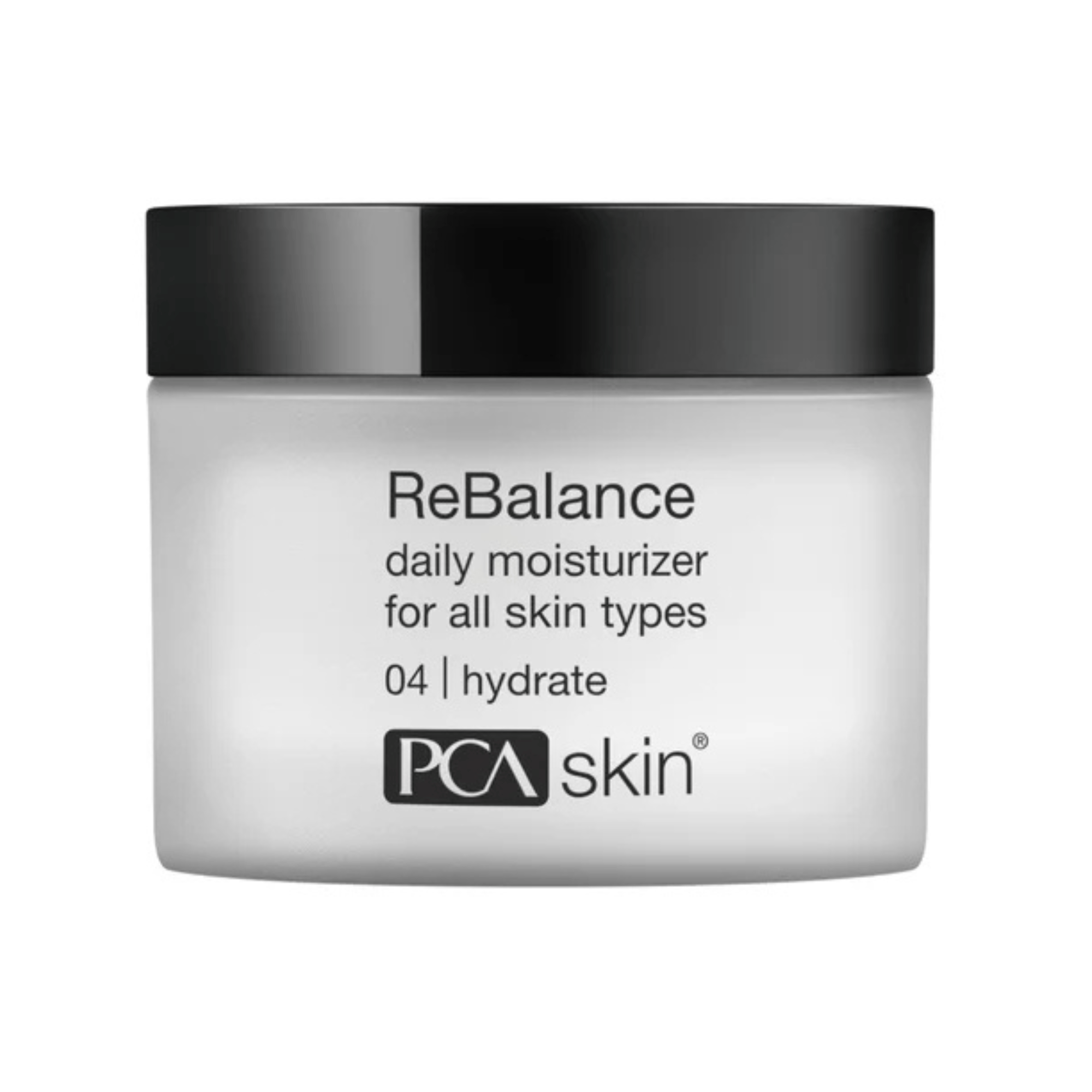
A lightweight daily moisturizer built for skin that doesn't need a lot of heavy lifting on the hydration front but does benefit from a calming, supportive base. ReBalance uses a blend of soothing anti-inflammatory ingredients to help reduce redness and sensitivity while keeping the barrier functioning properly. It works well as a standalone moisturizer for normal skin types or as a gentle option for days when reactive skin needs a break from more active products.
One of the more common complaints from oily skin types is that moisturizer makes their skin look or feel greasy by midday. HydraMatte is a gel-based formula that absorbs quickly, leaves a soft matte finish, and includes prebiotic ingredients to help rebalance the skin's microbiome over time.
Treating hyperpigmentation effectively usually requires targeting multiple points in the melanin production process at once. Pigment Gel Pro does this through PCA Skin's SynerPro Complex, which combines several melanin-interrupting ingredients to address dark spots through more than one pathway at the same time. It's hydroquinone-free, dermatologically tested, and designed to work for a wide range of skin tones.
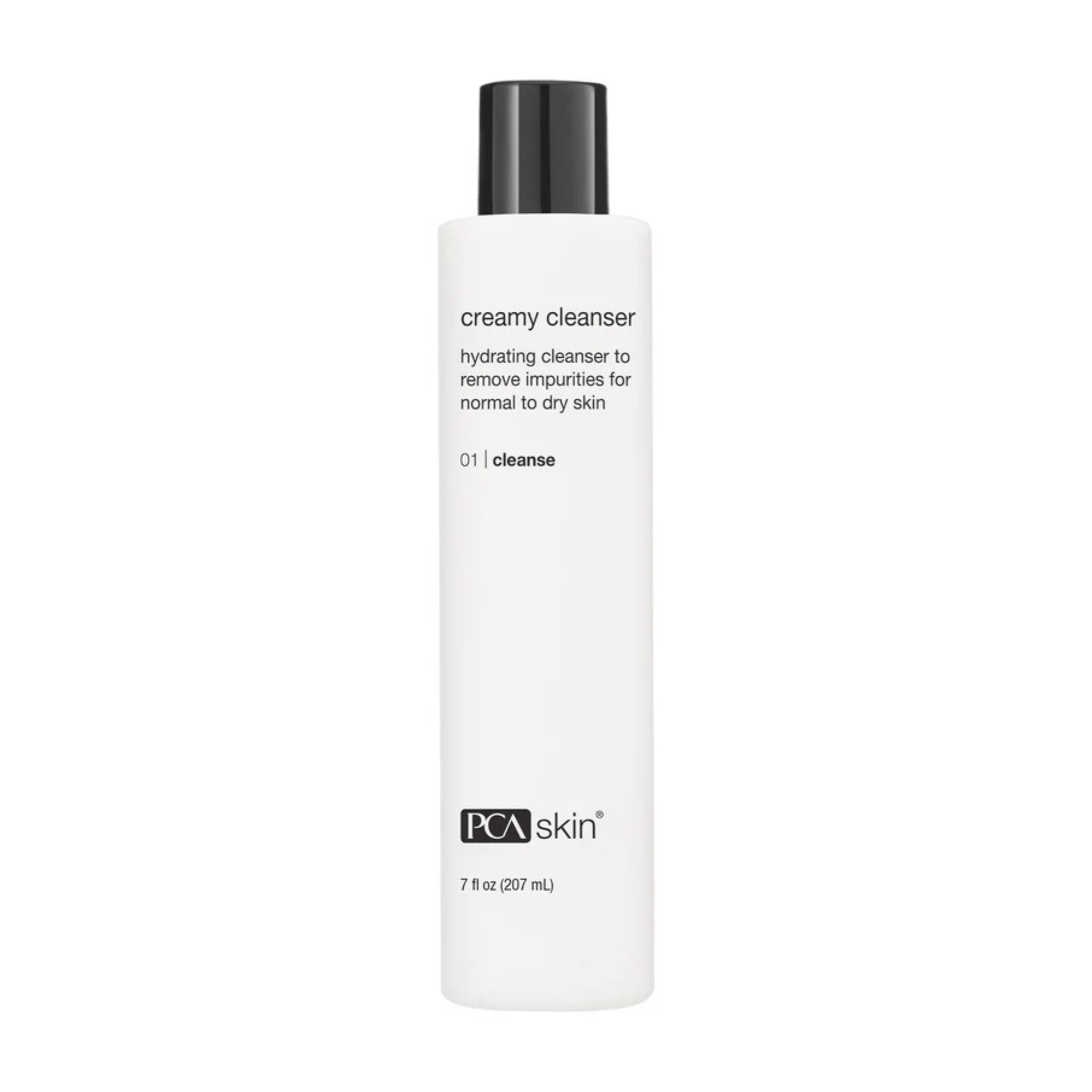
A gentle, non-stripping daily cleanser designed for dry skin. It removes makeup and daily buildup without leaving the skin feeling tight or disrupting the barrier. If your current cleanser leaves your skin feeling squeaky clean and tight, a creamy cleanser like this one could be worth a try instead.
A hydroxy acid-based exfoliating serum designed for regular at-home use between professional treatments. It supports ongoing cell turnover to keep texture smooth, pores clearer, and tone more even without the intensity of an in-office peel. For people who get regular chemical peels or laser treatments, this can be a practical maintenance option that helps to maintain results.
A Deep Dive into the Research
PCA Skin's scientific credibility rests on a few distinct foundations. The brand's long history in professional chemical peels means its ingredient expertise, particularly with hydroxy acids, is well-established and hard to dispute. Beyond that, its investment in OmniSome delivery and chiral correction make its sophisticated formulations really stand out.
The OmniSome technology itself has a strong scientific basis. Multilayered lipid encapsulation systems like the one PCA Skin uses are well-documented in pharmaceutical research for improving the bioavailability of active compounds and reducing surface-level irritation [4].
Chiral correction is similarly grounded in pharmacology. It's the same principle behind the development of single-enantiomer drugs, where removing the inactive or harmful mirror form of a compound improves therapeutic outcomes and reduces side effects. PCA Skin has applied this concept to skin care ingredients like vitamin C and various amino acids that are known to cause irritation [5].
The brand's SynerPro Complex, which is used in products like Pigment Gel Pro, reflects a solid understanding of the multiple pathways through which melanin overproduction occurs, and addresses them simultaneously rather than relying on one ingredient to carry all the weight [6].
Are There Any Limitations?
PCA Skin does not publish a large body of product-specific clinical trial data in the way some brands do. Much of the scientific case for their formulas rests on the well-established research behind their individual ingredients rather than controlled trials on finished products. This is fairly common in the professional skincare category and doesn't undermine the science, but it does mean that some of the brand's specific efficacy claims are harder to independently verify.

Which Skin Types Is PCA Skin Best For?
PCA Skin is one of the more broad-reaching medical-grade brands, with formulas for most concerns and skin types, including:
Oily or acne-prone skin – The brand's strength in salicylic acid-based peels and treatments carries through to its at-home acne lineup. Products like HydraMatte and the Resurfacing Serum give oily skin types real tools for managing congestion and shine without stripping the barrier.
Skin dealing with hyperpigmentation – PCA Skin's multi-ingredient approach to dark spots makes it a strong pick for uneven tone, post-acne marks, and sun damage.
People who get regular in-office treatments – Because the brand was built around in-office exfoliation protocols, its at-home products integrate naturally into routines built around professional peels, lasers, or microneedling. The Post-Procedure Solution Kit, for example, is a set of calming, supportive products designed for the days immediately following a treatment.
Sensitive skin types – PCA Skin's chiral correction and OmniSome delivery both contribute to better tolerability, making its active formulas a reasonable option even for sensitive skin.
Aging or mature skin – PCA Skin's peptide serums, retinol formulations, and antioxidant products cover the core bases for long-term collagen support and fine line reduction.

Are There Any Drawbacks to PCA Skin Products?
The biggest practical limitation is cost. PCA Skin sits firmly in the professional skin care price range, and some of its more advanced serums and treatments carry a significant price tag compared to drugstore alternatives. That said, the formulation sophistication does offer real value that cheaper products don't replicate.
The other consideration is that PCA Skin's product range is large enough that it can be hard to know where to start without some guidance. Because the brand covers so many concerns and skin types, trying to build a routine without a framework can lead to over-layering or picking products that don't work well together. Take the Baumann Skin Type Quiz before shopping to narrow down your search and find which PCA products are best suited to your skin.
Bottom Line
PCA Skin has earned its standing in the professional skincare world through more than three decades of consistent, science-grounded formulation. Its expertise in chemical exfoliation, combined with innovations in ingredient delivery and chiral correction, sets it apart from many other brands in the space. Whether you want to maintain results between professional treatments, manage persistent hyperpigmentation, or are just looking for tolerable medical-grade ingredients, PCA Skin has the range and the science to back it up.

Dr. Leslie Baumann MD, FAAD
Is PCA Skin cruelty-free?
Yes, PCA Skin does not test on animals.
Do I need to be getting professional treatments to use PCA Skin products?
No. While many formulas are designed to complement in-office procedures, PCA Skin's at-home lineup works as a standalone routine for everyday skincare needs.
Is PCA Skin good for sensitive skin?
Many PCA Skin formulas are well-suited for sensitive skin. That said, not every product is appropriate for every sensitive skin type. Using the Baumann Skin Type Quiz can help you identify which formulas are the right fit.
Best References and Scientific Publications on PCA Skin
- Baumann L. Antiaging Ingredients in Ch. 37 of Baumann's Cosmetic Dermatology Ed 3. (McGraw Hill 2022)
- Baumann, L. Ch. Cosmeceuticals and cosmetic Ingredients (McGraw Hill 2015)
- Deaville, C., & Tomlinson, C. (2017). Treatment outcomes with retinol peels in patients with ageing and problematic skin. Journal of Aesthetic Nursing, 6(8), 418-428.
- Pierre, M.B.R., dos Santos Miranda Costa, I. Liposomal systems as drug delivery vehicles for dermal and transdermal applications. Arch Dermatol Res 303, 607–621 (2011). https://doi.org/10.1007/s00403-011-1166-4
- Kandula, J. S., Rayala, V. P. K., & Pullapanthula, R. (2023). Chirality: an inescapable concept for the pharmaceutical, bio‐pharmaceutical, food, and cosmetic industries. Separation Science Plus, 6(4), 2200131.
- Draelos ZD, Diaz I. The clinical benefit of a multimodal topical approach to treating skin dyspigmentation. J Cosmet Dermatol. 2023;22:1799-1804. doi:10.1111/jocd.15786


