Remember Me

Library
Ingredients
Cosmeceutical Critique: Peptides
 

Volume 35, Issue 7, Page 30 (July 2004)

The use of peptides to treat aging skin is gaining favor among skin care enthusiasts. Consumers who have tried retinoids, hydroxy acids, and antioxidant creams are now turning to a group of biologically active compounds that promise to turn back the hands of time.

The natural healing process is dependent on biologic factors that signal cells to initiate the repair process. Macrophages secrete a host of substances, including growth factors that attach to cell surface receptors, thereby turning on a variety of cellular events. Vascular neogenesis and collagen synthesis are modulated by these factors and promote wound healing.

The pathogenesis of skin aging is well defined; it is characterized by a decrease in collagen synthesis and an increase in collagen breakdown, mediated by metalloproteinases (Arch. Dermatol. 138[11]:1462-70, 2002). This net loss in dermal collagen is believed to cause wrinkling. Biologic factors that stimulate collagen production in wound healing might provide similar benefits for aging skin. Accordingly, growth factors, peptide fragments, and other biologically active molecules are being incorporated into antiaging cosmeceuticals.

Growth factors are high-molecular-weight peptides with diverse biologic effects. Five key growth factor families have been identified, including transforming growth factor-? (TGF-?), epidermal growth factor (EGF), insulinlike growth factor (IGF), platelet-derived growth factor (PDGF), and fibroblast growth factor (FGF).

Because most cell types have receptors for TGF-?, this is the most important growth factor family. TGF-? is a potent stimulator of collagen production and promotes the synthesis of ground substances like glycosaminoglycan and proteoglycan (J. Biol. Chem. 262[14]:6443-46, 1987). TGF-? inhibits matrix degradation by reducing protease activity (J. Biol. Chem. 264[3]:1860-69, 1989). Proliferation of various cell types, including leukocytes and keratinocytes, is also inhibited by TGF-? (Am. J. Surg. 165[6]:728-37, 1993).

In animals, TGF-? has been shown to accelerate wound healing after incision (Science 237[4820]:1333-36, 1987) and to improve healing of full-thickness ulcers (J. Clin. Invest. 87[2]:694-703, 1991).

PDGF can stimulate extracellular matrix deposition and blood vessel formation, and has been shown to stimulate granulation tissue formation in animal models (J. Clin. Invest. 87[2]:694-703, 1991). EGF and IGF are referred to as invasion growth factors; they induce keratinocyte migration into the dermis, presumably by up-regulating matrix metalloproteinase activity (Invasion Metastasis 16[1]:11-18, 1996). IGF-1 stimulates epidermal proliferation and induces TGF-? activity (J. Cell. Physiol. 174[3]301-09, 1998).

Currently available cosmeceuticals contain either a single recombinant growth factor or multiple growth factors.

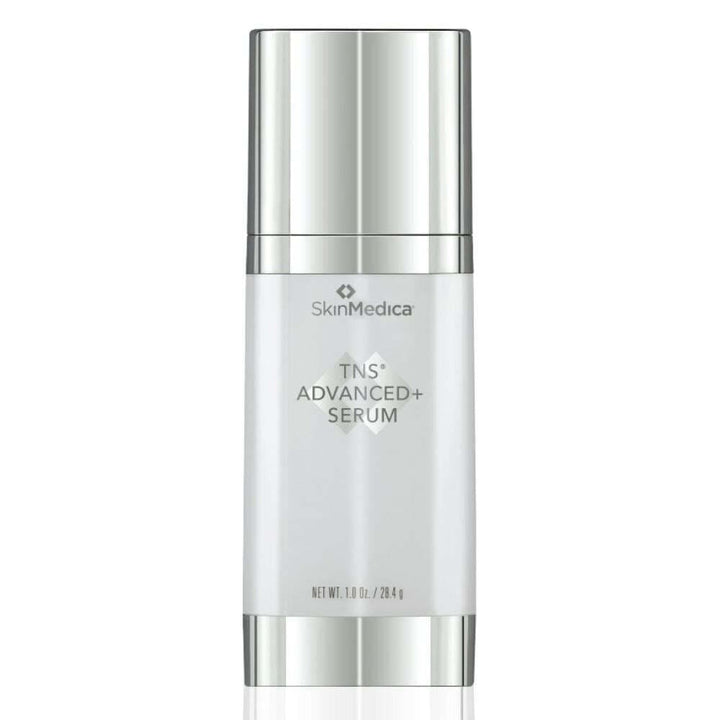
The TNS Recovery Complex with NouriCel-MD (SkinMedica Inc.) is derived from bioengineered skin and contains multiple growth factors, including TGF-?. RéVive Sensitif Cellular Repair Cream (Bays Brown Laboratories) contains recombinant EGF, while products in the Transformation Line (Jan Marini Skin Research Inc.) contain recombinant TGF-?1. Natura Bissé's Facial Day Cream (Natura Bissé USA) is derived from placental extracts and contains 4% skin growth factor, while Citrix CRS Serum contains TGF-?1 (Topix).

Compared with other cosmeceuticals, growth factor products are relatively expensive and can cost as much as $180 for 2 ounces.

Although topically applied growth factors are sold extensively, there are few published studies confirming their efficacy for treating aging skin.

Probably the most widely studied formulation is the TNS Recovery Complex with NouriCel-MD. Preliminary in vitro studies confirm that this growth factor product is capable of stimulating collagen production by fibroblasts, stimulates cellular proliferation of keratinocytes and fibroblasts, enhances vascular formation, and has potent anti-inflammatory effects, according to data presented in 2001 in a poster at a meeting of the Society for Investigative Dermatology.

In an open-label clinical trial of 14 patients applying TNS Recovery Complex gel with NouriCel-MD twice daily, 8 of 14 patients said their wrinkles were improved and optical profilometry on seven of eight specimens showed significantly less wrinkling at the end of 60 days (J. Cosmet. Laser Ther. 5[1]:25-34, 2003). Skin biopsies revealed an average increase in epidermal thickness of 30% and a 37% increase in grenz zone collagen.

These preliminary studies are promising, but larger, more objective clinical trials are needed. It is also uncertain whether single recombinant growth factors can provide the same benefits as multiple growth factors.

The newest peptide to be marketed as a treatment for aging skin is the procolla gen fragment Lys-Thr-Thr-Lys-Ser, also called KTTKS.

Studies conducted at the University of Tennessee and sponsored by the National Institutes of Health confirmed that this pentapeptide can promote the synthesis of collagen types I and III and fibronectin by cultured fibroblasts (J. Biol. Chem. 268[14]:9941-44, 1993). To enhance penetration of this hydrophilic peptide, palmitoyl—a 16-carbon fatty acid moiety—was added.

Pal-KTTKS, also called Matrixyl, has been shown to penetrate human skin and remains in the dermis, according to unpublished reports.

Currently, several products contain Pal-KTTKS, including Olay's Regenerist, StriVectin-SD, and Strixaderm-MD. Matrixyl is patented, manufactured, and sold for commercial use by the French company Sederma.

In a double-blind, vehicle-controlled study of 49 women sponsored by Sederma and presented in a poster at the 2002 World Congress of Dermatology in Paris, Pal-KTTKS (3 ppm) decreased skin roughness by 13%, reduced wrinkle volume by 36%, and decreased wrinkle depth by 27% after 4 months of twice-daily application on the face and neck. Skin biopsies performed on six women at 2 and 4 months demonstrated increased density and thickness of elastin fibers, while collagen type IV was improved at the dermal-epidermal junction.

Clinical studies sponsored by Procter & Gamble supported the benefits of Pal-KTTKS on photoaging skin.

In a study presented in a poster at the 2003 American Academy of Dermatology annual meeting in San Francisco, 92 women with moderate to severe photodamage participated in a split-face, randomized, double-blind, vehicle-controlled study. Subjects were treated for 12 weeks with twice-daily applications of facial moisturizer containing 3 ppm of Pal-KTTKS. Pal-KTTKS significantly improved facial lines and wrinkles as measured by image analysis of digital photos and expert grading, and did not negatively affect the skin barrier as measured by transepidermal water loss.

Additional studies were performed to compare the effects of Pal-KTTKS (3 ppm) to retinol (700 ppm) in the same vehicle. In a study presented at the 2002 World Congress of Dermatology in Paris, 16 women applied Pal-KTTKS to crow's-feet on one side of the face and retinol to the other for 4 months.

At the end of 2 months, Pal-KTTKS provided greater benefit than did retinol; at 4 months, both agents performed similarly and had reduced wrinkles as much as 50%. The investigators noted that Pal-KTTKS offered these benefits without the irritation that is often associated with retinol use.

Argireline, or acetyl hexapeptide-3, is a synthetic peptide that is touted as a topical alternative to botulinum toxin injections.

This peptide was developed and synthesized by Lipotec S.A. in Barcelona, Spain, and is distributed in the United States by Centerchem Inc. Argireline is found in several cosmeceuticals, including Avotox, DDF's Wrinkle Relax (HDS Cosmetics Inc.), and Inhibit (Natura Bissé). Most products contain 5%-10% argireline; Inhibit may have the highest concentration at 20%, and costs $135 for 0.5 ounce.

Extensive in vitro studies have been performed to elucidate argireline's mechanism of action (J. Biol. Chem. 272[5]:2634-39, 1997). One such study demonstrates that the peptide acts by preventing formation of the solubleN-ethylmaleimide-sensitive fusion attachment protein (SNAP) receptor complex, and thus inhibiting vesicle docking. Catecholamine release, including epinephrine and norepinephrine, was inhibited by argireline in vitro. The investigators suggested that this synthetic peptide may have practical medical applications because it mimics the action of clostridial neurotoxins in vitro.

Clinical trials on the efficacy of topically applied argireline are limited. An open-label trial of 5% argireline and an oil- and-water emulsion, applied twice daily, was conducted on 10 women.

Silicone replicas of periorbital rhytides were analyzed using confocal laser scanning microscopy, and demonstrated a 17% improvement after 15 days of treatment and a 27% improvement after 30 days of treatment.

Although argireline clearly demonstrates interesting in vitro activity, larger, more objective clinical studies are necessary to confirm its efficacy. Permeability studies performed on human skin would also be necessary, because this peptide would have to penetrate to the muscles to exert its proposed mechanism of action.

The use of biologically active peptides continues to be an area of interest. Ongoing research validating their mechanisms of action and clinical efficacy will be necessary to confirm their usefulness in our armamentarium for treating aging skin.


DR. PATRICIA FARRIS is a clinical assistant professor at Tulane University in New Orleans, and she has lectured internationally on topical treatments for aging skin. To respond to this column, or to suggest topics for future columns, write to us at our editorial offices via e-mail at sknews@elsevier.com.

© 2004 Elsevier Inc. All rights reserved.


<< Previous Article |Back to List| Next Article >>